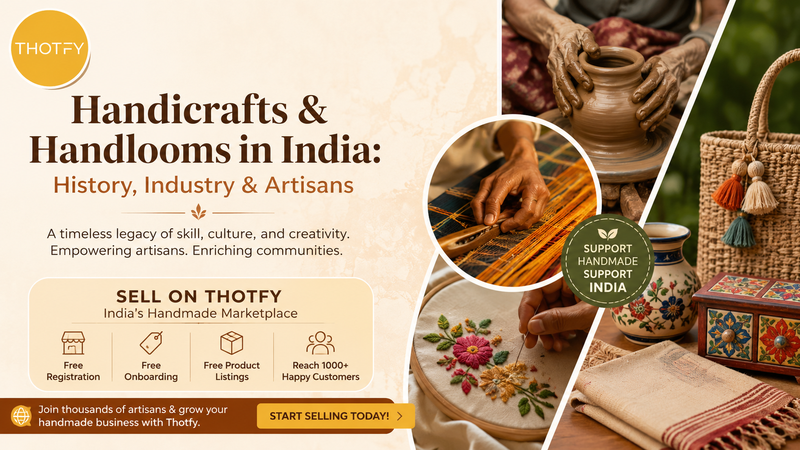
Handicrafts & Handlooms in India: History, Industry & Artisans
“The rich tradition of Indian craftsmanship is built upon the dedication of every skilled handicraft person and artisan across the country. These talented handicraft people breathe life into timeless techniques, transforming raw materials into exquisite art. Today, the growing handicraft sector in India plays a vital role in empowering rural communities and preserving cultural heritage. By choosing ethical, sustainable handicraft works, modern consumers actively support local creators. Exploring this vibrant industry reveals the deep value of authentic handmade goods over mass-produced alternatives, ensuring these remarkable artisanal traditions continue to thrive for generations to come.”
Exploring the World of Handloom Textiles and Indian Handicrafts
Handloom textiles are a vibrant part of India's rich cultural tapestry. They tell stories of tradition, skill, and artistry. These textiles are not just fabrics; they are a testament to human creativity. If you are looking to discover unique creations, browse the curated Thotfy marketplace homepage for inspiration.
"As the festive season approaches, finding the right way to celebrate relationships and heritage becomes essential. For those seeking meaningful, handcrafted presents that honor traditional craftsmanship, explore our curated selection of artisanal treasures in the Diwali Gifts Collection, featuring thoughtfully designed hampers, home accents, and unique festive finds."
The handicraft sector in India is a vital economic force. It provides jobs to millions and supports rural communities. This industry is diverse, producing everything from textiles to pottery. Handicrafts and handlooms are crafted using age-old techniques passed down through generations, preserving cultural heritage. The artisans, or craftspeople, are the heart of this industry. If you are a creator looking to showcase your work, you can easily sell on Thotfy and reach a broader audience.
In recent years, there's been a growing demand for sustainable and ethical products. Handloom textiles fit this trend perfectly, offering unique and eco-friendly options.
What is Handicraft? Understanding the Basics
What is handicraft? It involves creating items by hand, often using simple tools. This art celebrates the human touch and individual creativity. Each piece carries a part of the maker's soul and vision.
The term encompasses a wide array of crafts. These include weaving, pottery, woodwork, and embroidery. Each craft reflects the diverse cultures and traditions of its origins. Handicraft works are often appreciated for their uniqueness. Unlike machine-made items, no two handcrafted pieces are identical. This uniqueness adds to their appeal and value in today's world.
Key Characteristics of Handicraft:
- Handmade: Crafted by skilled hands.
- Cultural Heritage: Reflects traditions and history.
- Unique and Valuable: Each piece is distinct.
- Skill and Artistry: Requires talent and dedication.
A handicraft person, often called an artisan, plays a crucial role. They preserve the techniques and stories embedded in each piece. These artisans are the backbone of the entire ecosystem. Independent makers looking to scale their businesses can securely register as a vendor on Thotfy.
The Rich History of Handloom Textiles
Handloom textiles have a history dating back to ancient times. They are among the oldest crafts, with roots in early civilizations. Evidence of these textiles has been found in ancient archaeological sites.
India's handloom tradition is particularly rich. It reflects a diverse cultural heritage and a long-standing tradition of textile creation. Over the centuries, techniques and styles evolved, yet the essence remained. Historically, handloom textiles were an integral part of society's fabric. They were used in daily life and significant ceremonies, underscoring their importance beyond mere functionality.
Key Aspects of Handloom History:
- Ancient Roots: Origin in early civilizations.
- Cultural Diversity: Varied styles across regions.
- Societal Role: Used in everyday and special occasions.
- Evolution: Adaptive styles over time.
The historical significance of handloom textiles is profound. They tell tales of human creativity and cultural expression. This rich history continues to inspire modern artisans and designers.
The Handicraft Sector in India: An Economic and Cultural Powerhouse
The handicraft industry in India is both an economic giant and a cultural treasure. Millions of artisans contribute to this vibrant sector. Their skills and craftsmanship fuel local economies and enrich cultural life.
Handlooms and handicrafts are deeply woven into India's economic fabric. The broader handicraft industry empowers rural artisans, especially women, by providing sustainable livelihoods. By supporting local handicrafts, buyers help keep ancient traditions alive while boosting grassroots economic development.
If you are an independent creator or brand wanting to grow your business, you can partner with us to sell your creations. Joining allows you to connect directly with conscious buyers who value authentic craftsmanship.
Frequently Asked Questions (FAQs)
- 1. What is handicraft?
Handicraft refers to items made completely by hand or using simple tools, focusing on individual artistry, cultural tradition, and unique craftsmanship. - 2. Why are handicrafts and handlooms important in India?
They preserve ancient cultural heritage, provide massive rural employment, and drive the economy through sustainable artisan practices. - 3. How can artisans sell their handicraft works online?
Artisans and makers can sign up through our vendor portal to reach customers looking for authentic, handmade goods. - 4. What makes handmade crafts different from machine-made products?
Handcrafted items are unique, carry personal artisan touches, and feature traditional techniques that mass-produced factory items cannot replicate.