Timeless Traditional Pooja Thali Designs and Ideas
“A pooja thali is more than a tray—it’s a compact, beautifully arranged “ritual space” that brings clarity, calm, and completeness to your daily worship and festival ceremonies. Whether you’re preparing for a grand celebration or a simple morning prayer, exploring traditional pooja thali designs and ideas helps you connect aesthetics with devotion. Discover exquisite handcrafted options, statement art collectibles, and traditional brass sets available through the Thotfy catalogue, alongside practical steps on how to decorate a puja thali and arrange your spiritual essentials seamlessly.”
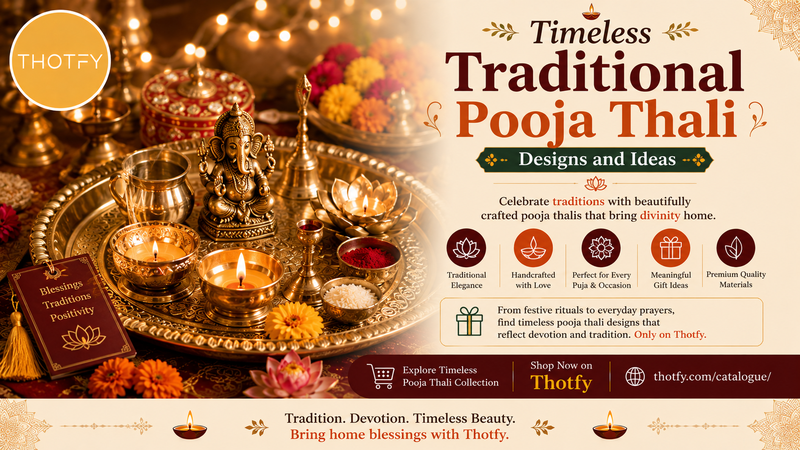
Timeless Traditional Pooja Thali Designs and Ideas
A pooja thali is more than a tray—it’s a compact, beautifully arranged “ritual space” that brings clarity, calm, and completeness to your daily worship and festival ceremonies. Whether you’re preparing for a grand celebration or a simple morning prayer, exploring traditional pooja thali designs and ideas helps you connect aesthetics with devotion. In this guide, you’ll find practical traditional pooja thali designs, culturally rooted traditional thali designs, and step-by-step pooja thali decoration ideas—including guidance on how to decorate a puja thali, what to keep in pooja thali, and smart pooja thali arrangement tips for beginners.
Understanding the Pooja Thali: Purpose, Symbolism, and Style
A thali keeps your worship essentials organized, accessible, and ritually “complete.” Traditional design isn’t only about ornate decoration; it’s also about correct placement and functional harmony.
Why Traditional Designs Still Matter
Traditional aesthetics typically:
- Use auspicious motifs (lotus, diya, kalash, Om, swastik in the traditional context)
- Favor warm metallic tones (brass, copper, silver)
- Prioritize balance: flame (diya), fragrance (incense), purity (water), offering (naivedya)
At the same time, modern homes often prefer a minimalist puja thali setup that’s easy to maintain—without losing the essence of tradition.
What to Keep in Pooja Thali (Core Essentials + Regional Variations)
If you’re wondering what to keep in pooja thali, start with the universal basics, then add festival- or family-specific items.
Core Items Most Thalis Include
- Diya (oil lamp) or tealight holder (traditional diya is preferred)
- Agarbatti/dhoop stand
- Kumkum and haldi containers
- Akshat (uncooked rice) or grains
- Chandan (sandal paste) if used in your practice
- Flowers (fresh or dried)
- Naivedya (prasad, sweets, or fruit)
- Small bell (optional)
- Camphor (kapoor) for aarti (optional depending on custom)
- Panchamrit or water in a small bowl (as per tradition)
- Matchbox or lighter (keep discreetly, but practically)
Add-ons That Are Common in Traditional Thali Designs
- Kalash mini symbol or a tiny copper pot
- Sacred thread (mouli or kalava)
- Betel leaves and nuts (where customary)
- Coins (especially for Lakshmi-related worship)
Your final selection should be guided by family tradition. A well-made thali is not “more items,” but the right items placed respectfully.
Best Material for Puja Thali: How to Choose (Beauty + Practicality)
Choosing the best material for puja thali is often the first design decision. Traditional materials aren’t only aesthetic; they’re chosen for longevity and ritual suitability.
Silver vs. Brass Pooja Thali: Which One Fits Your Needs?
Silver pooja thali designs are loved for their premium look, festive elegance, heritage feel (especially for gifting or weddings), and suitability for special occasions and formal pooja rooms.
Brass options are popular because of their warm, traditional glow, everyday sturdiness, and availability in many classic designs.
If your goal is daily use and low worry, brass often wins. If your goal is heirloom and statement, silver shines.
Traditional Pooja Thali Designs: Classic Styles That Never Go Out of Trend
Here are timeless traditional pooja thali designs you can adopt, buy, or recreate at home.
1) Engraved Metal Thali (Floral, Mandala, Temple Motifs)
This is the “most traditional” look—an engraved brass or silver plate with subtle detailing, paired with matching katoris (small bowls) for kumkum, haldi, and akshat.
2) Silver Pooja Thali Designs with Katoris and Diya Set
A full silver set often includes a thali, diya, incense holder, bell, and multiple katoris. It is best for festivals, housewarming ceremonies, and gifting to newlyweds or elders.
3) Traditional Thali Designs with Red Velvet or Fabric Base
Adding a velvet lining brings a royal, festive feel. It works well for Diwali, weddings, and Navratri. Practical note: Use fabric only on areas away from flame/diya for safety.
4) Kundan Pooja Thali Design (Heritage-Meets-Glamour)
A kundan pooja thali design is among the most festive and photo-friendly options, featuring stonework patterns and bright accents in red, green, and white stones. It shines during Diwali Lakshmi puja, Karwa Chauth, and wedding ceremonies.
5) Handmade Pooja Thali with Mirror Work (Folk-Art Charm)
A handmade pooja thali with mirror work is vibrant and deeply rooted in Indian craft traditions, ideal when you want a colorful, celebratory mood.
6) Minimalist Puja Thali Setup (Traditional, but Uncluttered)
A minimalist puja thali setup focuses on function and serenity, perfect for daily pooja and small apartments. It includes one diya, one incense stand, two small katoris, loose petals, and one prasad portion in clean metal lines.
Pooja Thali Decoration Ideas: Step-by-Step Themes You Can Use
Theme 1: Classic Red-and-Gold (Festival-Friendly)
- Color palette: Red, gold, yellow (best for Diwali, Lakshmi puja, wedding rituals)
- How to decorate: Place a red velvet circle at the center, set the diya slightly right of center, place kumkum/haldi katoris on the left, arrange marigold petals in a neat border ring, and add the prasad bowl at the top edge.
Theme 2: Floral Temple Style (Fresh and Traditional)
- Best for: Daily pooja, Satyanarayan katha, Navratri
- Decoration tip: Use one type of flower (marigold or rose) to avoid visual clutter, and keep the incense stand downwind from flowers to prevent ash buildup.
DIY Pooja Thali at Home: Easy Traditional Projects
DIY 1: Simple Embellished Border (Beginner)
- You need: Plain steel/brass thali, decorative lace or gota patti, and strong craft glue.
- Steps: Clean and dry the rim thoroughly, apply lace or gota only on the outer rim to keep the center heat-safe, and add tiny stone clusters at cardinal points.
DIY 2: Kundan-Inspired Look (Intermediate)
- You need: Metal or MDF base thali, kundan stones, pearl chain, and a fabric circle for the center.
- Steps: Create a neat border pattern first, keeping a small blank area where the diya sits. Finish with symmetrical top-and-bottom highlights for balance.
Pooja Thali for Specific Occasions
Diwali Lakshmi Puja Setup
A pooja thali for Diwali Lakshmi puja emphasizes prosperity symbols and a bright, auspicious palette. Include your primary diya, incense, kumkum, clean coins for symbolic offering, sweets like laddu or barfi, and lotus or marigold flowers. Keep the center open and clean—Diwali thalis look best when they aren’t overcrowded.
Navratri Pooja Thali Items List
A clear Navratri pooja thali items list includes a diya, dhoop/agarbatti, kumkum/roli and haldi, akshat, daily fresh flowers, vrat-friendly prasad, a small bell, matches, and a clean cloth or tissue for quick cleanup. Stick to a bright color theme like red or yellow and focus on daily durability.
Wedding Pooja Thali for Griha Pravesh
A wedding pooja thali for griha pravesh is more elaborate because it’s part of a milestone ritual. Use a coordinated premium metal set (brass or silver) with rich kundan or pearl borders, arranged symmetrically for elders to carry during rituals.
How to Decorate a Puja Thali: Essential Arrangement Rules
- Create a clear “heat zone”: Keep the diya and camphor area free of fabric, plastic, and heavy stonework. Place the diya where your hand naturally reaches it for aarti.
- Use the triangle principle: Arrange the three most-used items (diya, incense stand, kumkum/haldi) in a smooth triangle.
- Keep powders and liquids separated: Kumkum near akshat is fine, but water or oil containers should be slightly away to avoid spills.
- Don’t overfill the thali: A thali should be liftable and stable. If you need extra items, keep a small side plate nearby.
Discover Handcrafted Pooja Thalis Online at Thotfy
Looking for exquisite, artisan-made brass and silver-plated pooja thalis to elevate your spiritual space? Explore the curated home and living marketplace at Thotfy. From traditional engraved brass plates and kundan-embellished festival thalis to minimalist everyday worship sets, unique art collectibles, stylish accessories, and artisanal handmade fabric bags created by independent creators, Thotfy offers authentic pieces that bring grace, devotion, and elegance into your home.
To add an extra touch of sacred elegance and traditional craftsmanship to your festive rituals, explore our curated Diwali Gifts Collection featuring beautifully handcrafted brass and metallic pooja essentials made by independent artisans.
Frequently Asked Questions (FAQs)
Q1: What are the essential items that must be kept in a traditional pooja thali?
Answer: Essential items include a diya (oil lamp), an incense (agarbatti) stand, kumkum and haldi containers, akshat (uncooked rice), fresh flowers, a bell, matches, and naivedya (prasad or sweets).
Q2: Which material is better for a puja thali: brass or silver?
Answer: Brass is ideal for daily worship due to its sturdiness, heat resistance, and warm glow, whereas silver is traditionally preferred for heirlooms, weddings, formal puja rooms, and festive gifting.
Q3: How can I safely decorate a pooja thali using fabric or stones?
Answer: Always keep fabric linings and plastic stones away from the central “heat zone” where the lit diya or camphor rests, ensuring flammable materials never come into contact with open flames.
Q4: What is the best way to arrange items on a puja thali for beginners?
Answer: Use the triangle principle by placing your primary diya, incense holder, and kumkum container in a balanced triangular layout, leaving the center clear and keeping liquids separated from dry powders.
Q5: Where can I buy authentic handmade pooja thalis and ritual sets online in India?
Answer: You can explore a wide variety of artisan-crafted brass pooja thalis, silver-plated sets, and traditional ritual essentials directly online through the Thotfy catalogue.
"...Adorning your sacred space with freshly picked flowers, sacred kumkum, and a beautifully arranged metallic or brass thali creates a deeply spiritual and serene ambiance for your evening prayers. To add an extra touch of sacred elegance and traditional craftsmanship to your festive rituals, explore our curated Diwali Gifts Collection featuring beautifully handcrafted brass and metallic pooja essentials made by independent artisans. Bringing these authentic, creator-made pieces into your home honors our rich heritage while making your worship space truly special."