5 High-Demand 3D-Printed Products to Launch Your Brand in 2026
“In the last decade, 3D printing transitioned from an industrial novelty to a cornerstone of the creator economy. In 2026, we are witnessing the rise of "Micro-Factories"—home-based studios where designers are bypassing traditional manufacturing to create "Small-Batch" luxury goods. Unlike mass-produced plastic items, the modern 3D-printed aesthetic is defined by complexity, sustainability, and customization. For the Indian artisan, this represents a unique opportunity: the ability to sell high-margin, "Aesthetic-First" products without the need for massive inventory or warehouse space. At Thotfy, we’ve analyzed browsing data and emerging "Vibe" trends to identify the five most lucrative niches for 3D-printed entrepreneurs today.”
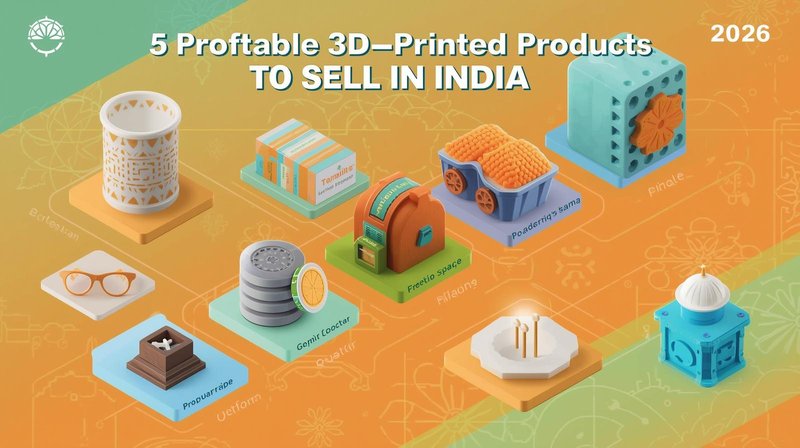
1. Bio-Filament Kinetic Home Decor
The Trend: "Biophilic Design" (bringing nature into the home) is the leading interior trend of the decade. The Product: Moving beyond static vases, the market is craving Kinetic Planters and Parametric Lampshades. These are items that use 3D printing’s unique ability to create interlocking parts and "impossible" geometries that mimic coral reefs or honeycomb structures.
- Why it Sells: You cannot buy these shapes at a traditional retail store. When printed using PLA+ or Wood-composite filaments, these items feel earthy and premium.
- The Thotfy Edge: Our "Aesthetic Search" thrives on unique textures. A parametric lamp that creates intricate shadow patterns on a wall is a "high-discovery" item that attracts premium buyers.
- Pricing Strategy: A high-quality, large parametric vase can retail for ₹2,500 – ₹4,500, with a material cost often under ₹400.
2. Custom Ergonomic Desk-Scapes
The Trend: With the permanent shift to hybrid work, the "Desk-Scape" (aesthetic desk organization) has become a status symbol for professionals and gamers alike. The Product: Custom Mechanical Keyboard Cases, Vertical Laptop Stands, and Modular Cable Management Systems.
- The Opportunity: While generic stands are everywhere, 3D printing allows you to offer customization. Imagine a laptop stand specifically measured for a MacBook Pro M4, or a keyboard case with a "Marble-finish" PLA.
- Consumer Pain Point: Most desk accessories are "one size fits all." By offering bespoke dimensions, you solve a specific problem while charging a premium for "Tech-Luxury."
- Marketing Tip: Use high-contrast photography showing these accessories in a clean, minimalist home office setup.
3. "Slow-Fashion" 3D-Printed Jewelry & Wearables
The Trend: Gen-Z and Millennial consumers are pivoting away from fast fashion toward "Statement Pieces" that tell a story. The Product: Interlocking Chainmail Necklaces, Lattice-Structure Earrings, and Custom-Fit Eye-Wear Frames.
- Why it Sells: 3D printing (especially Resin or SLA printing) allows for a level of detail that traditional jewelry molds cannot achieve. You can create earrings that weigh almost nothing but have the visual complexity of an ancient cathedral.
- Material Innovation: Using Silk-PLA or Recycled Plastic Filaments aligns your brand with the "Sustainable Luxury" movement.
- Profitability: Small items like earrings have very low material costs (₹20 - ₹50) but high perceived value (₹800 - ₹1,500) due to the design's complexity.
4. Sustainable Educational "Tinker-Toys"
The Trend: Parents in 2026 are actively seeking screen-free, educational alternatives to mass-market plastic toys. The Product: Geodesic Construction Kits, Biological Cell Models, and Mechanical Puzzles.
- The Niche: Target the "STEM-Parent" demographic. Instead of a simple toy, you are selling a "Learning Experience."
- Safety & Trust: By using Food-Safe filaments and "Open-Source" designs that you have modified for better durability, you build a brand based on safety and quality.
- The Thotfy Connection: Thotfy’s community values the "Story" behind the product. Sharing your process—how you designed a puzzle to help a child understand geometry—creates an emotional bond with the buyer.
5. Functional Lithophanes and Personalised Light-Art
The Trend: Personalized gifting remains the #1 driver of e-commerce sales during the Indian festive season (Diwali, Weddings, etc.). The Product: 3D-Printed Lithophane Night Lamps. A lithophane is an etched artwork that only reveals its image when light shines through it.
- The Hook: You aren't just selling a lamp; you are selling a memory. Customers send you a photo of their family or pet, and you "print" that memory into a 3D lampshade.
- Technical Advantage: This requires specific slicing skills, making it a "High-Barrier" niche. Once you master the settings, you have a product with almost zero local competition.
- The Gift Market: Position these as "The Ultimate Anniversary Gift."
How to Scale Your 3D-Printing Business on Thotfy
Phase 1: Visual Storytelling
3D printing can sometimes look "cheap" if photographed poorly. To sell on an aesthetic marketplace like Thotfy, you must use lifestyle photography. Don't just show the product; show it in a lived-in space. Show the printer "in action" on your social media to prove it is a handmade, tech-artisan process.
Phase 2: Lean Manufacturing
The beauty of 3D printing is "Just-In-Time" inventory. You don't need to stock 100 units. You can list 10 unique designs on Thotfy, and only print them once an order is placed. This keeps your overhead low and your "UIN-based" business highly profitable.
Phase 3: Leveraging Aesthetic Search
When listing your products on the Thotfy Seller Portal, focus on "Sensory Keywords." Describe the texture (matte, silk, wood-feel), the movement (kinetic, modular), and the lighting effect. Thotfy’s AI-driven search will then match your "Lattice Lampshade" with a buyer who has been looking for "Minimalist Geometric Decor."
5 High-Demand 3D Printed Products You Can Start Selling Today