





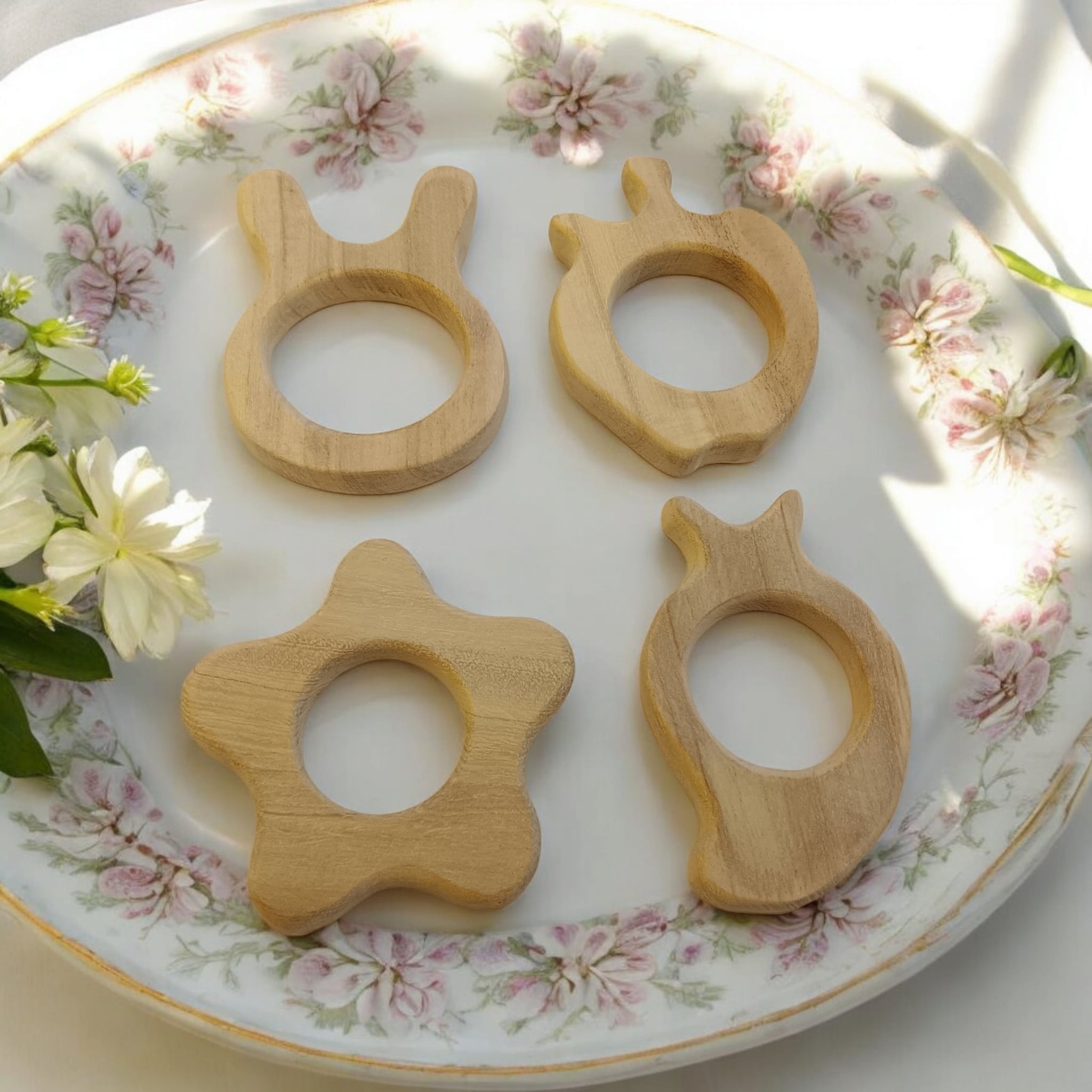
Benefits of Using Wooden Baby Teethers
Choose wooden baby teethers with a clear understanding of the wood, finish, age guidance, and care they need. For health-conscious parents, eco-friendly mothers, grandparents, and baby shower gift buyers in India, a thoughtfully selected neem wood teether can bring natural materials and artisan craftsmanship into everyday baby care. Start with verified product details—not promises that “natural” automatically means safe.
Request material, age-suitability, and safety details before choosing your baby’s teether.
What should you look for in a wooden teether for baby?
Look for a purpose-made, age-labelled teether with smooth surfaces, sound construction, disclosed materials, and clear cleaning instructions. For infants aged 3 to 6 months, suitability must be confirmed for the individual product; it cannot be assumed from the wood species or appearance. Choose according to the baby’s age and abilities, and check the manufacturer’s warnings before use. Toy-safety guidance emphasises age recommendations, quality construction, and regular checks for damage.
When comparing natural baby teethers, make these details your starting point:
- Identified wood: Ask whether the product is solid neem wood and whether other materials are included.
- Disclosed finish: Request the complete treatment and coating information, including any oils, colours, adhesives, or preservatives.
- Appropriate design: Look for a clearly stated age range and instructions specific to that shape.
- Safety documentation: Ask for applicable testing and certification details for the finished product, not simply the raw material.
- Practical care guidance: Confirm how to clean, dry, inspect, and replace the teether.
These are useful questions whether you are buying for your own child or sending a gift to another family. A reassuring product description should make the answers easy to find. If essential information is missing, pause the purchase and ask for clarification.
Natural materials, with nothing left unexplained
The appeal of a handmade wooden teether is easy to understand: you can prioritise a simple design, a named wood, and an openly disclosed finish. If your preference is an unpainted, plastic-free product, say so when enquiring. Ask the seller to confirm those characteristics rather than relying on the product photograph.
Treat “100% natural” as a description to investigate, not a safety guarantee. Request a full account of what goes into the finished teether, including its surface treatment. That gives you something concrete to assess alongside age guidance and testing.
Likewise, “zero chemicals” and “chemical-free” are not useful literal promises: wood and coconut oil are themselves made of chemical substances. More meaningful information identifies which paints, synthetic coatings, fragrances, or preservatives have not been added—and what has been used instead.
If you are searching for a non toxic wooden teether, ask what evidence supports that wording. For an organic baby teether, check whether “organic” refers to a particular ingredient, such as the finishing oil, or to a documented certification. Do not assume an organic label covers every component.
You deserve plain answers without having to interpret a string of reassuring adjectives. Keep the material description, finish details, and supporting documents together when comparing products.
Neem wood benefits without antibacterial overpromises
Neem is central to this natural-material approach, but its reputation needs careful explanation. Laboratory research has found antibacterial activity in certain neem bark extracts against selected bacteria. That research concerns prepared extracts under study conditions; it does not establish that a finished neem wood baby teether disinfects itself or prevents infections.
If you encounter the description antibacterial neem teether, ask whether the seller has evidence for the actual product. The relevant question is not simply whether neem contains biologically active compounds. It is whether the finished item has been tested for the specific claim being made.
Choose neem for an honestly described material and a well-documented product—not as a substitute for cleaning. Avoid treating antibacterial language as permission to share a teether between babies or ignore the manufacturer’s care instructions.
There is still room for a reassuring choice. A seller who distinguishes material research from product performance gives you a clearer basis for deciding. Prefer that transparency over promises of a germ-free surface or guaranteed protection.
Ask for the wood identification, finish disclosure, and any finished-product evidence together. That makes the conversation useful rather than leaving “antibacterial” as an unexplained label.
Artisan craftsmanship and a clearly disclosed finish
For families seeking handcrafted artisan origin, the maker’s process is worth exploring. Ask who makes the teether, where the shaping and finishing happen, and what quality checks follow. Handcrafted should describe how an item is produced; it should not replace evidence that the finished design is suitable for babies.
A practical enquiry can cover:
- Shaping and sanding: Ask how edges, curves, and openings are checked for a smooth finish.
- Construction: Confirm whether the design is one piece or includes joined components.
- Organic coconut oil seasoning: If advertised, request confirmation of the oil used and whether anything else is added.
- Ongoing maintenance: Ask whether re-oiling is required and follow only the maker’s approved instructions.
Organic coconut oil seasoning is a finish detail, not proof that the whole teether is certified organic or suitable for every infant. Keep that distinction in mind when comparing organic baby teethers.
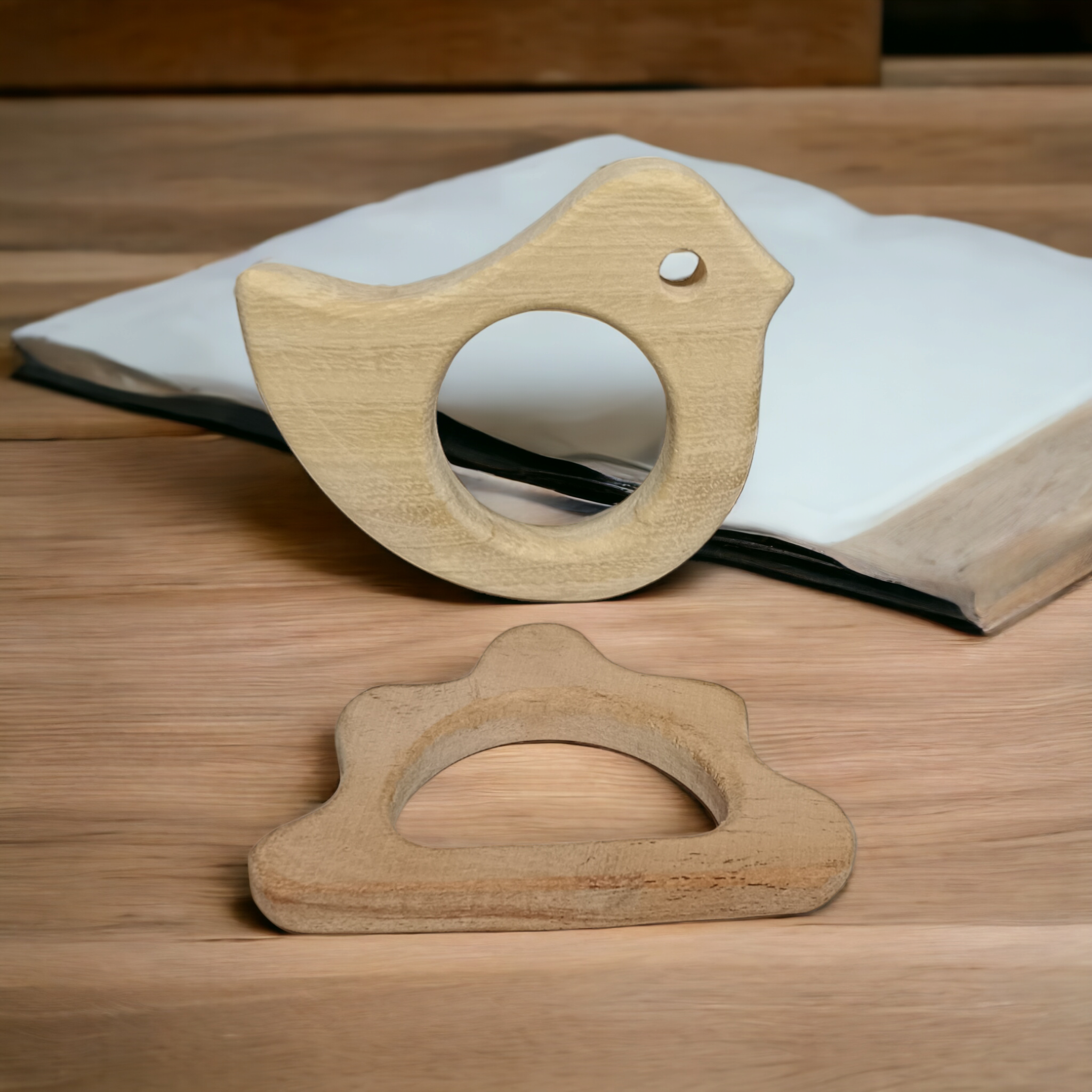
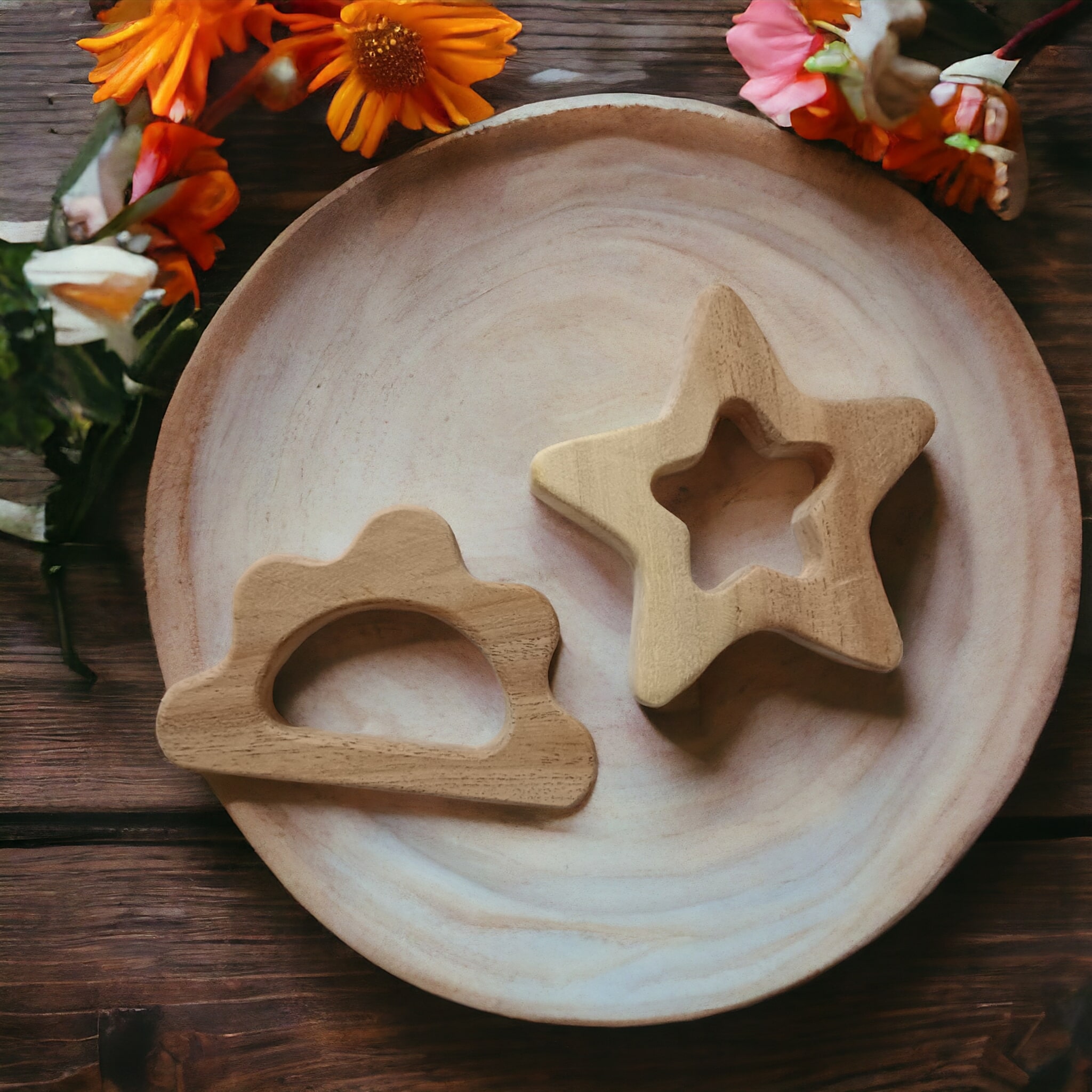
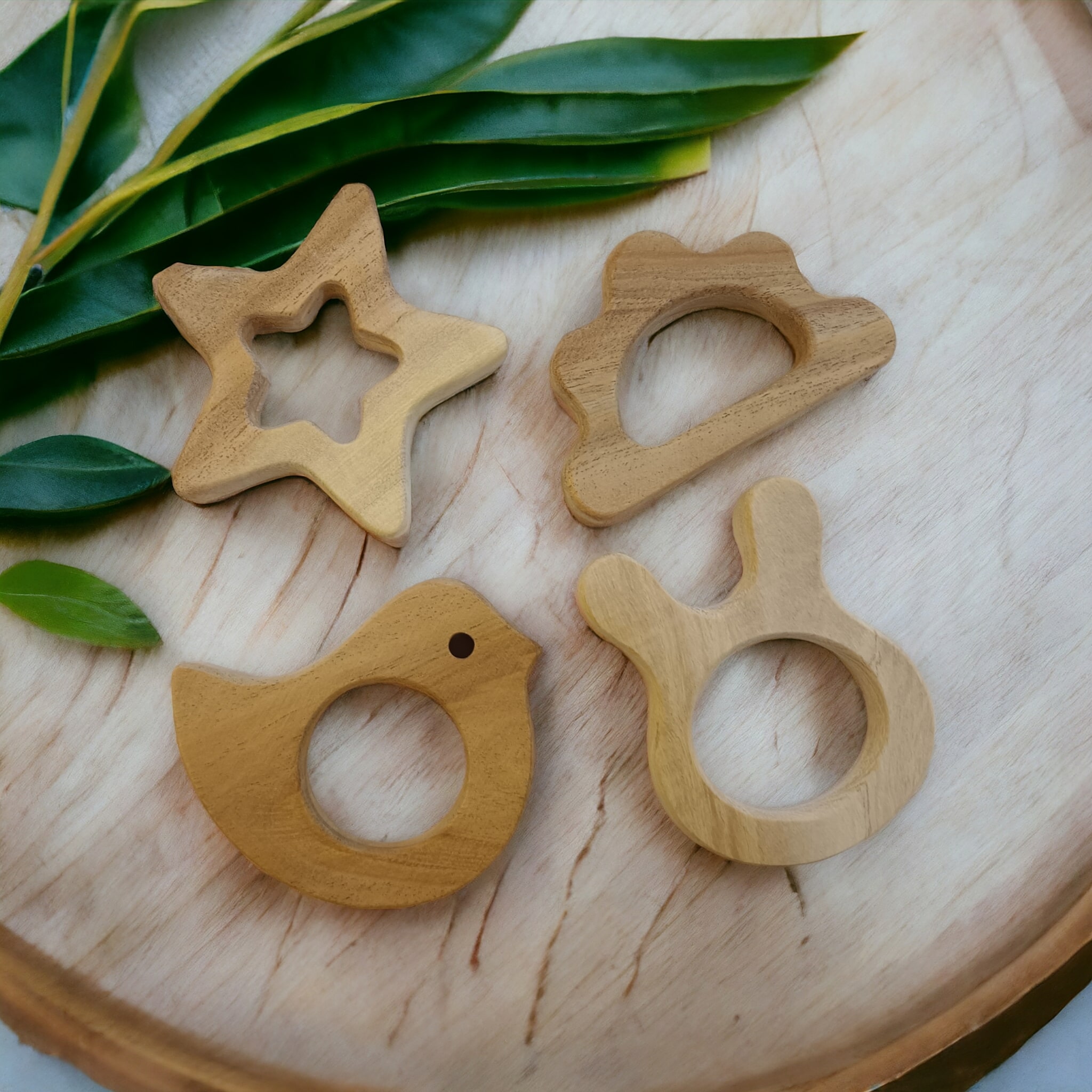
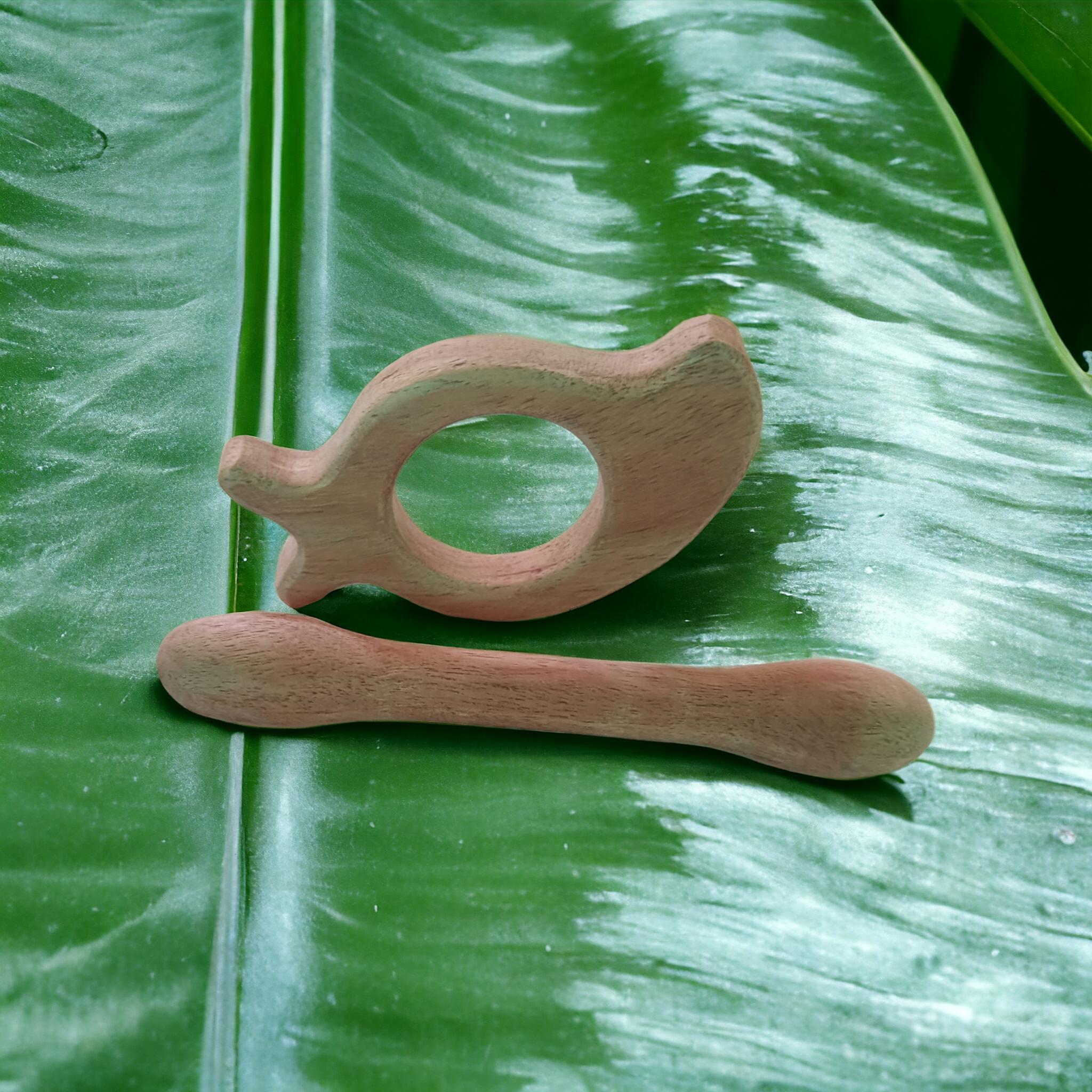
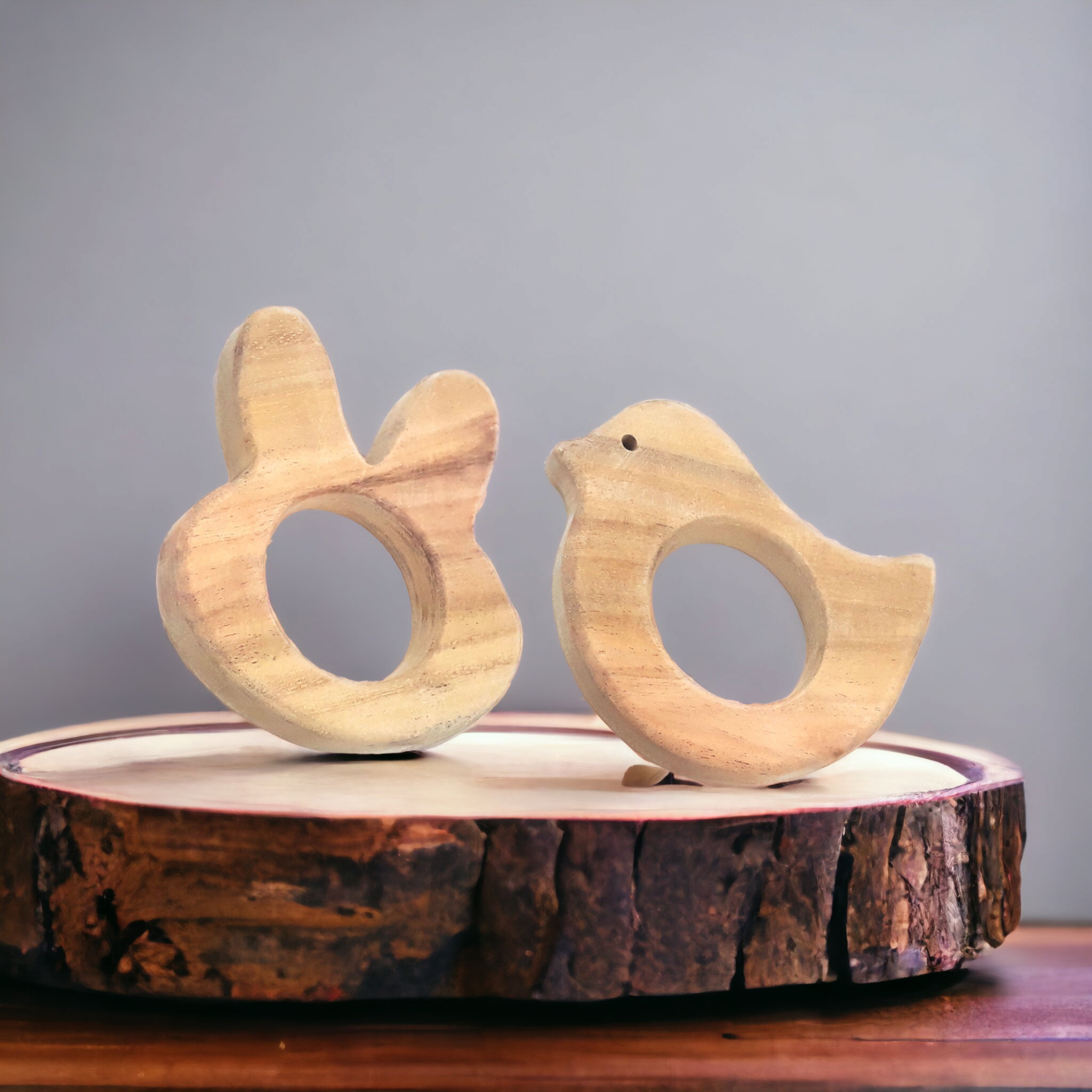
For example, two similar-looking rings may come with very different disclosures: one names the wood and finish, while the other says only “natural.” Choose the information you can assess, not the more attractive wording. Photographs can introduce a product, but they cannot answer every material or construction question.
Simple shapes for early grasping and exploration
During the early months, reaching, holding, and bringing objects towards the mouth become part of a baby’s exploration. An appropriately selected graspable toy offers opportunities to practise these movements. This supports ordinary play and fine motor grip development; it does not mean wooden teethers accelerate milestones or outperform other suitable toys.
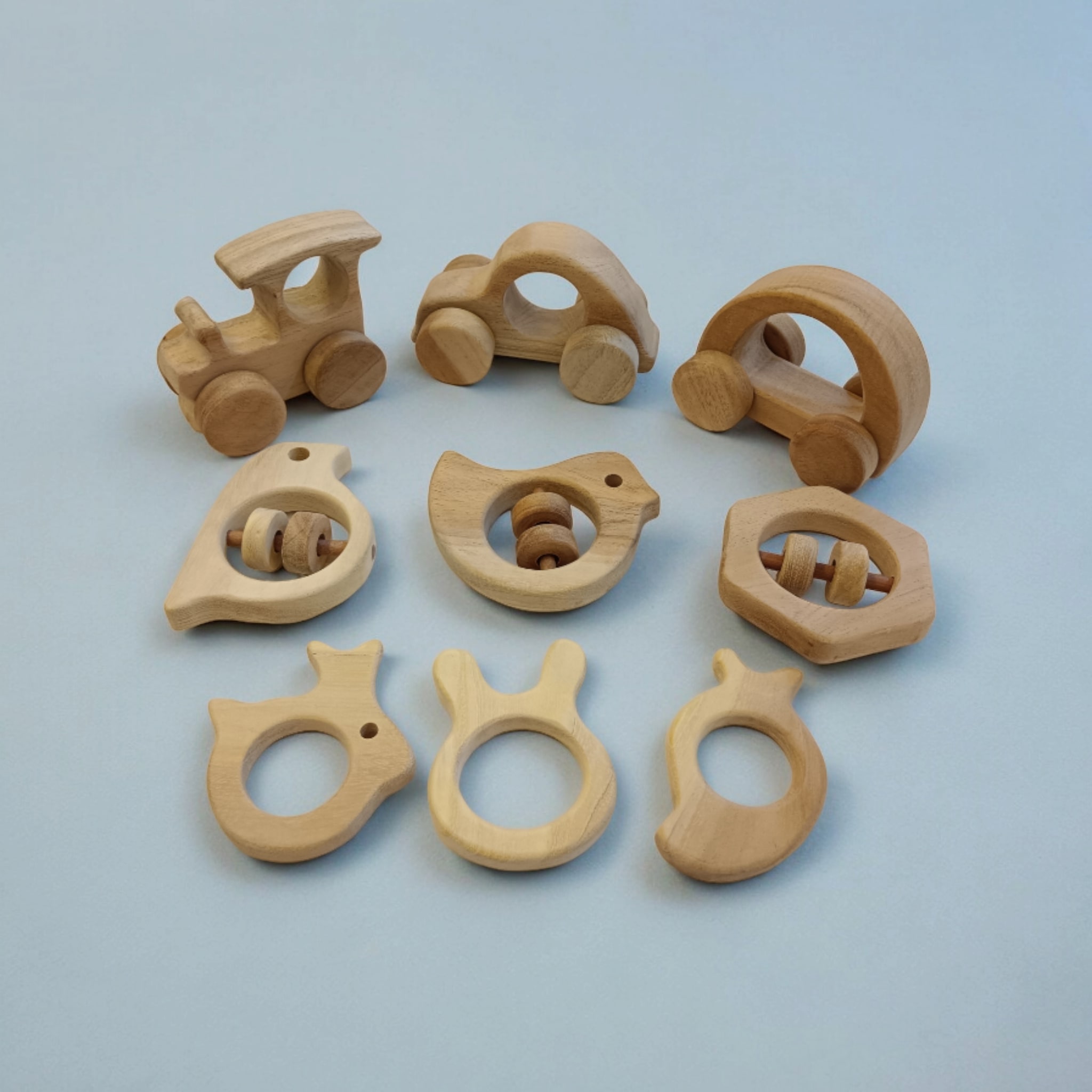
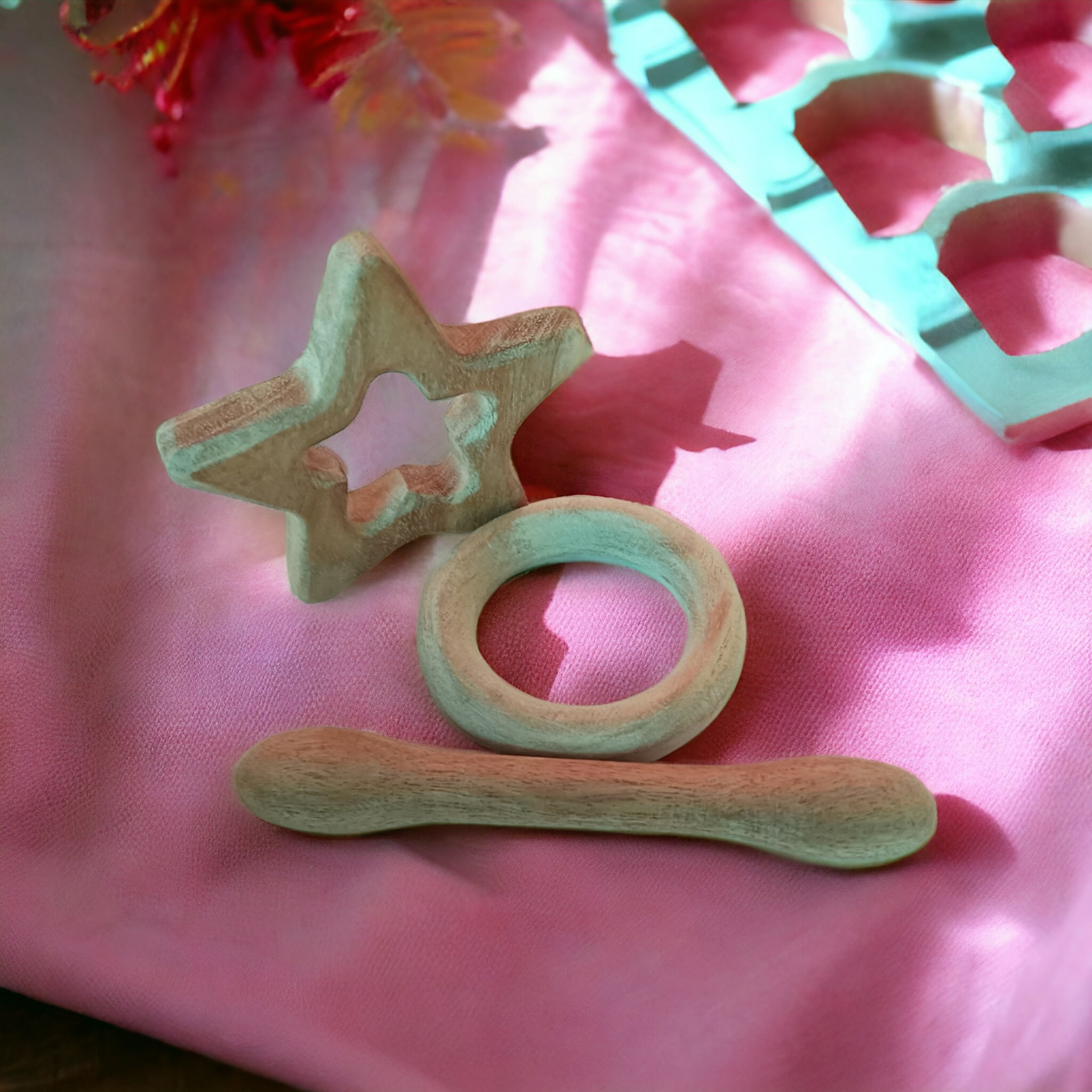
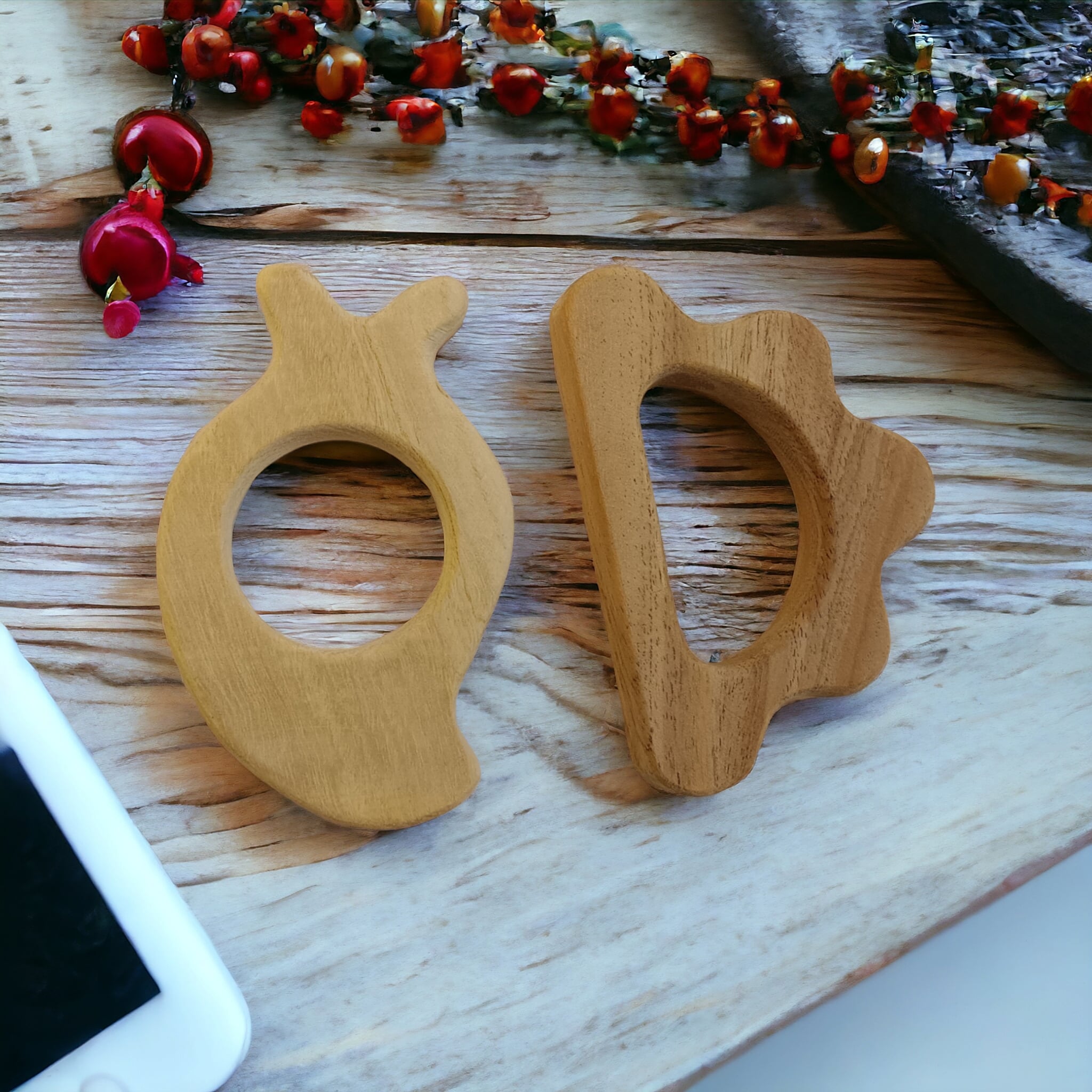
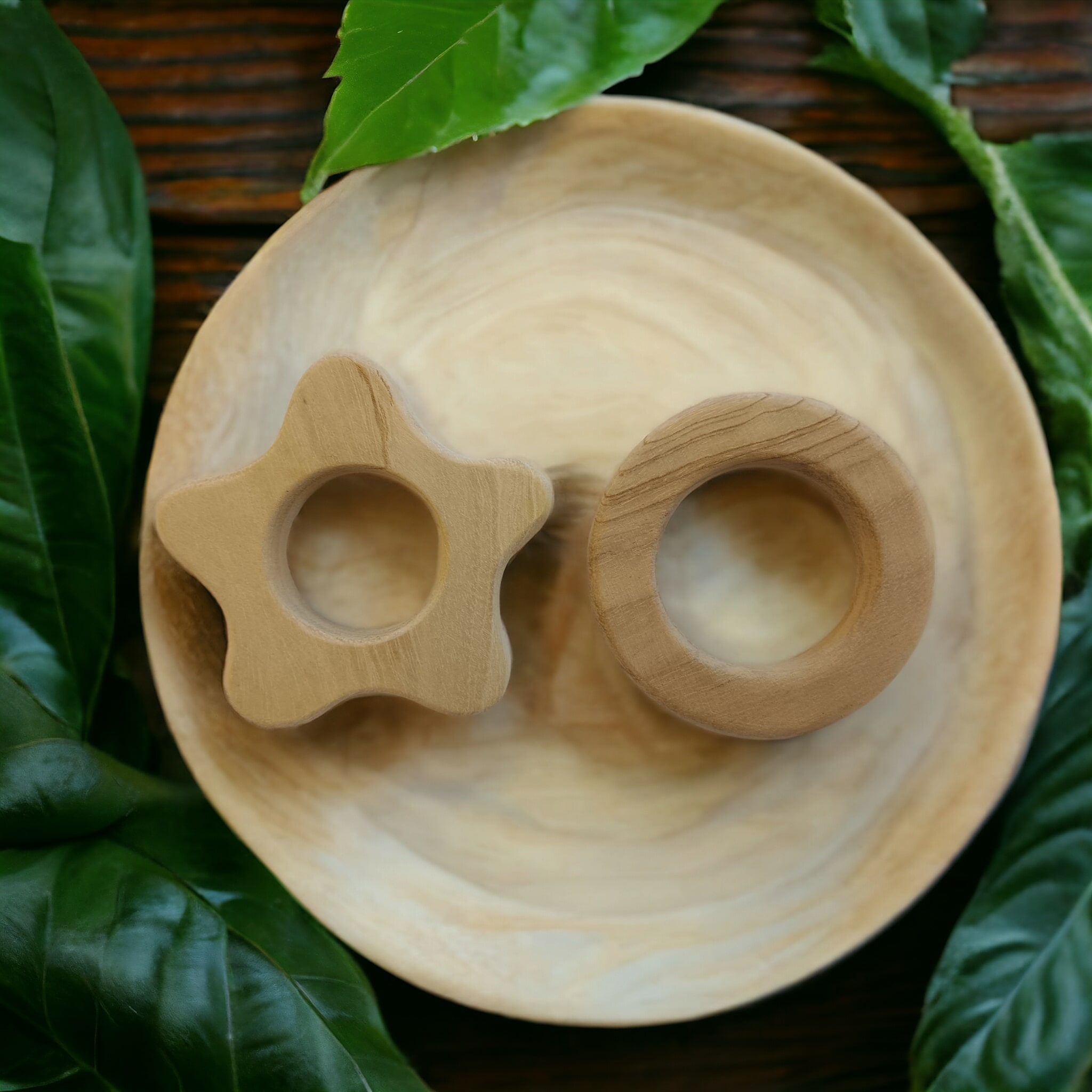
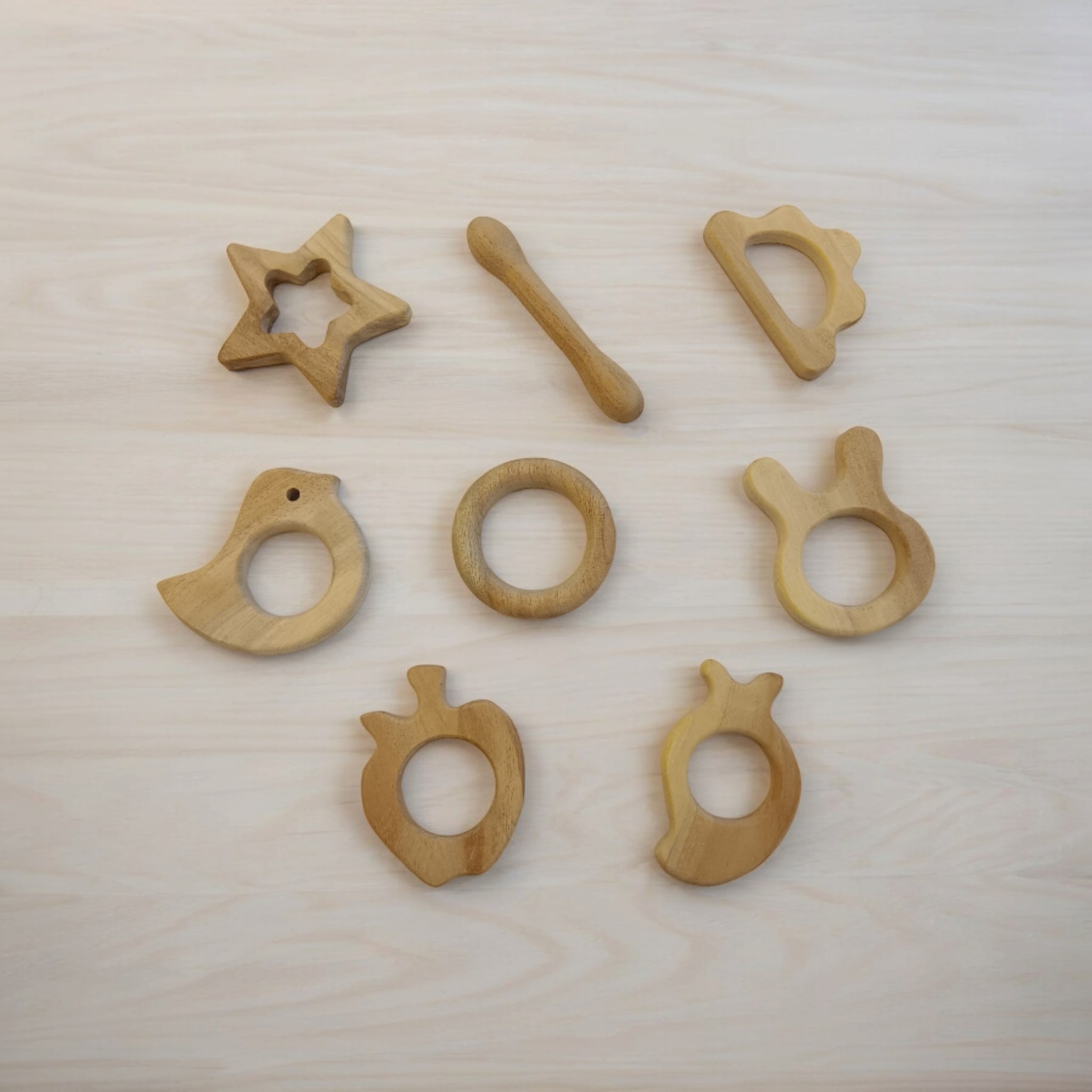
An organic wooden teether ring may appeal to buyers who prefer a simple shape. Before purchasing, check the actual dimensions, age recommendation, and construction rather than assuming every ring suits a small hand. Infant toy guidance favours graspable designs that are lightweight but sturdy, with rounded edges.
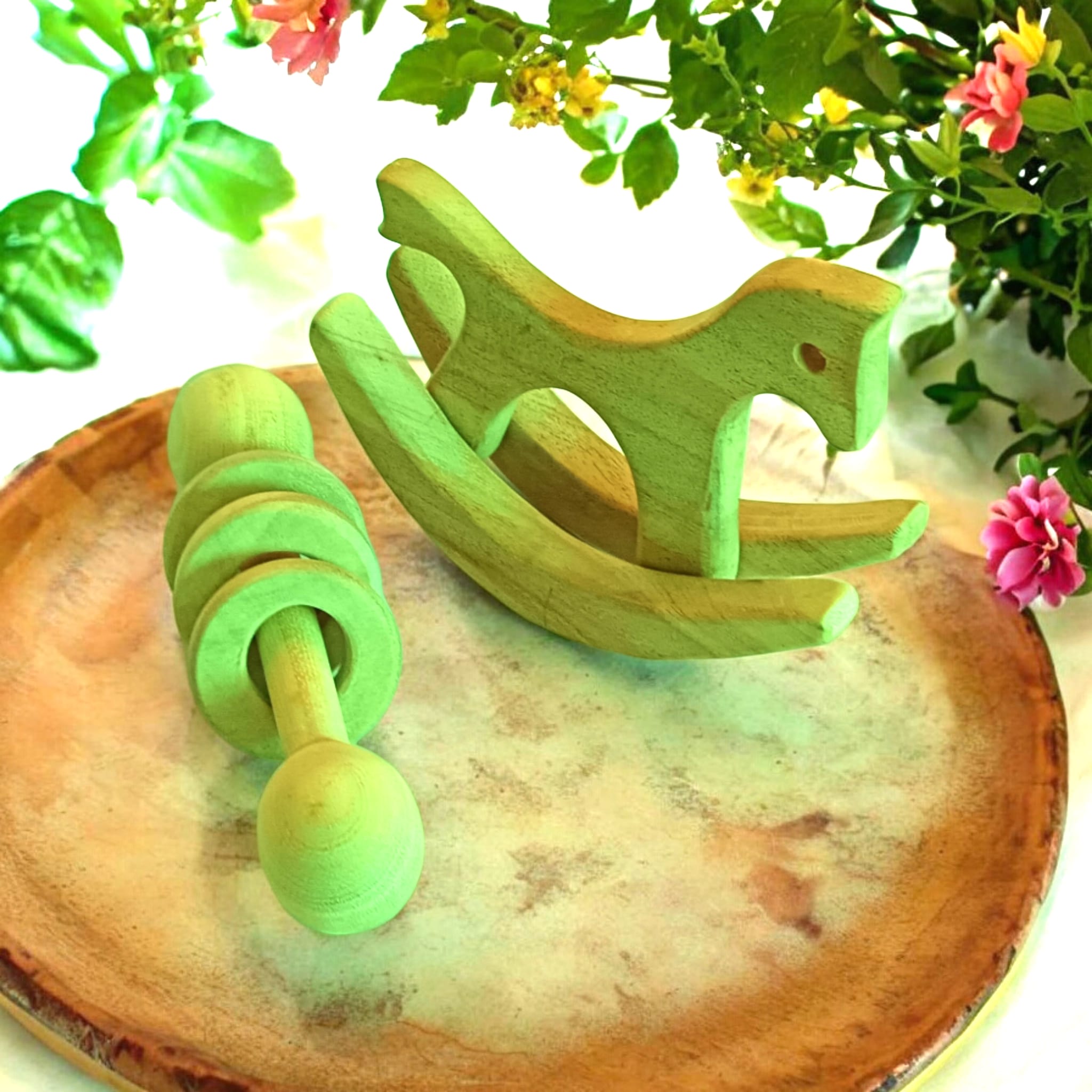
A wooden rattle teether for baby needs additional consideration because it combines functions. Ask how the rattle components are secured and whether the whole item is intended for mouthing. Age-appropriate toy selection should account for small parts and the baby’s abilities, not just the product’s name.
Picture a short, supervised play moment: you offer an approved toy within reach and let your baby explore without pressure to perform. The value is in that interaction, not in collecting more designs. Choose one suitable item before building a larger toy basket.
Baby teething relief with safety kept in view
A teether should never be presented as guaranteed pain relief. For sore gums, the FDA describes gentle massage with a clean finger and a firm rubber teether as options; it also warns that an object that is too hard can hurt a child’s gums. These recommendations do not establish that wooden teething toys are suitable for every baby.
If you are considering wood for a baby aged 3 to 6 months, discuss suitability with your paediatrician when unsure, especially if the baby seems uncomfortable using it. Follow the product’s age guidance rather than introducing it simply because chewing has begun.
Keep expectations modest. An individual baby may prefer another suitable texture or may not want a teether at that moment. Do not force the item into the mouth or continue an activity that appears uncomfortable.
For baby teething relief, avoid turning a shopping decision into a treatment promise. The FDA warns against benzocaine or lidocaine teething products and reports serious risks from teething jewellery. A simple comfort routine should not involve adding medicated gels or attaching a teether around the baby’s neck.
Your baby’s comfort matters more than making a particular material work.
A plastic-free preference with practical eco priorities
If reducing plastic purchases is important to your family, specify zero plastic in the teether itself when asking about a design. Confirm all components: a wooden-looking product may still include other materials. Check packaging separately rather than assuming the entire purchase is plastic-free.
When comparing sustainable baby toys, use a short, practical checklist:
- Wood sourcing: Ask where the wood comes from and what supports any responsible-sourcing claim.
- Complete composition: Confirm the materials in attachments, decorative pieces, and finishes.
- Packaging: Request information about unnecessary wrapping and available alternatives.
- Useful ownership: Choose a suitable design with care instructions you can realistically follow.
An eco friendly baby teether should come with specific explanations rather than a broad “planet-friendly” promise. Do not assume that wood alone proves a lower environmental impact across sourcing, manufacture, transport, and disposal.
A useful approach is to buy thoughtfully rather than collect several similar products. For instance, check the parents’ preferred materials before ordering a gift set. One well-chosen item that meets their requirements is a more considered purchase than a bundle selected only for its appearance.
Everyday care that fits your family
Before first use, read the instructions for that exact teether. Ask the manufacturer to clarify cleaning, drying, storage, and maintenance if the guidance is incomplete. Do not borrow a cleaning routine from another material or assume that boiling, soaking, steam sterilising, or dishwashing is approved.
Build inspection into the routine. Consumer toy-safety guidance recommends checking toys for breakage and potential hazards, including sharp edges and splinters on wooden items. Remove a damaged teether from use and contact the manufacturer for replacement guidance rather than continuing to offer it.
For a household where parents and grandparents share care, keep the instructions in an accessible place. Explain which item belongs to the baby and how its condition should be checked. A consistent routine is more useful than relying on everyone to remember a verbal handover.
Keep these points visible:
- Check before offering: Look over the surface, edges, and any joined components for damage.
- Follow approved care: Use only the cleaning and finishing methods specified by the maker.
- Watch during use: Supervise teether use and stop if anything seems unsuitable.
- Replace when needed: Do not keep using a broken or hazardous toy.
Natural wood teething toys still need ordinary attention. No material label removes that responsibility.
A thoughtful gift for families in India
For grandparents and baby shower gift buyers, useful information belongs alongside thoughtful presentation. Before choosing a teether, confirm the parents’ preferences, the product’s intended age, and whether they are comfortable with the care required. Keep the packaging and instructions so the family can assess the item before offering it.
In India, check applicable BIS certification and Standard Mark details rather than accepting an unsupported “safe baby teethers” claim. BIS describes toy-safety assessment as covering relevant requirements such as physical safety and chemical-related hazards. Ask the seller which documentation applies to the product you are considering.
There is no need to guess at the best wooden baby teethers from photographs alone. Compare the answers on materials, construction, age suitability, care, and evidence. For a gift, those answers are part of what makes the choice considerate.
Make your next step a well-informed choice
Bring your preferences together: neem wood, artisan-made construction, a disclosed finish, plastic-free components, and appropriate age guidance. Then ask the seller to confirm each detail for the specific design you want.
Request product details before you buy. Share the baby’s age and ask for material information, care instructions, and applicable safety documentation. Choose only when the answers give you a clear, practical basis for bringing the teether into your baby’s routine.
Frequently Asked Questions
- Q: Why is neem wood recommended for baby teethers over plastic or silicone?
A: Neem wood possesses natural antibacterial properties that help prevent germ growth. A neem wood teether is 100% natural, biodegradable, non-toxic, and free from microplastics or harmful chemical leaches. - Q: How do I clean and maintain a handmade wooden baby teether?
A: Wipe your wooden teether for baby with a damp cloth dipped in warm water and mild liquid baby soap. Never submerge wooden teethers in water, put them in a dishwasher, or sterilize them in a microwave. Recondition dry wood occasionally with a drop of organic coconut oil. - Q: Is a wooden teether safe for a 3-month-old baby starting to teeth?
A: Yes! Our wooden baby teethers are lightweight, smooth, and contoured specifically for tiny hands and early 3-to-6-month-old teething stages.
Explore Top Organic Wooden Baby Teethers Collections
- Antibacterial Neem Wood Teethers for Natural Chemical-Free Gum Relief
- Handcrafted Crochet Wooden Ring Teethers for Early Sensory & Tactile Development
- Smooth Animal & Geometric Wooden Rattle Teethers for Fun Grip Practice
- Affordable Eco-Friendly Wooden Teether Gift Sets Curated for Newborns Under ₹799
Looking for Custom Baby Shower Hampers or Eco-Gifting Packages?
Need curated organic newborn welcome kits, custom color crochet themes, or volume discounts for maternity and daycare gifting? Enjoy express delivery across India and safe baby-first curation.
[ Request Organic Baby Shower & Bulk Gifting Quote ]
More Handcrafted Collections
(Looking for More Handcrafted & Seasonal Ideas? Explore Our Top Collections Below)
- Decor & Home Accent Collections:Home Decor | Winter Home Decor | New Year Party Decor & Lighting | Home Decor Lights | Handcrafted Wall Art | Living Room Showpieces | Decorative Mirrors | Art and Collectibles
- Festive & Seasonal Gift Collections:Diwali Gifts | Housewarming Gifts | Winter Housewarming Gifts | Wedding Return Gifts | Birthday Return Gifts
- Corporate & Office Gifting Collections:Corporate Gifts | Corporate New Year Gifts & Hampers
- Personal & Budget Gifting Collections:Handmade Gifts | Anniversary Gifts for Couple | Ceramic Coffee Mugs | Gifts Under 300 | Gifts for Women | Gift For Every Mom
- Jewellery & Fashion Accessories:Festive Jewellery | Oxidized & Silver-Plated Ethnic Jewellery | Handmade Tote Bags | Festive Keychains & Accessories
- Kids & Play Collections:Kids Toys | Handcrafted Wooden Toys